
Post Summary
Can you put hardwood flooring in a bathroom?
Yes, but it is not the best fit for every bath. Humidity, spills, and plumbing leaks can cause rot or mold, so hardwood suits a lower-traffic bath such as a powder room or guest bath better than a busy main bath.
What are the advantages of hardwood in a bathroom?
Hardwood feels warmer underfoot than ceramic or porcelain tile, looks elegant, lasts a long time with good care, and can be refinished instead of replaced. It can also add to a home’s market value.
What are the downsides of hardwood in a bathroom?
It is not fully water resistant, it costs more than options like ceramic or luxury vinyl tile, it can scratch, it needs regular sealing, and it can squeak over time.
How do you protect a bathroom hardwood floor from water?
Install shower and tub surrounds in porcelain tile or luxury vinyl tile, add a strong exhaust fan and bath mats, and keep up regular maintenance with a good sealer. Check the plumbing before installation.
Which wood and finish work best in a bathroom?
The article names ebony, cherry, live oak, and bamboo (technically a grass) as especially tough, usually at a higher price, and notes that engineered hardwood is increasingly common. Polyurethane, oil-based or water-based, is the most popular finish.
Hardwood flooring in a bathroom might not be the best option in such high humidity and not-too-friendly wood environment as a bathroom setting.
Bathrooms have a lot of water spills, drainage issues, plumbing problems, and humidity in general. All of these cause any type of wood to lose its quality over time and develop rot or mold.
However, hardwood floors are still a viable option for a bathroom with lower traffic than that of the main bath.
Let’s look at the advantages and disadvantages of hardwood flooring in bathrooms, and what to consider before you install wood flooring in your bath.

Advantages Of Hardwood Flooring In Bathroom
1. Hardwood Flooring In Bathroom Is Warmer And More Comfortable
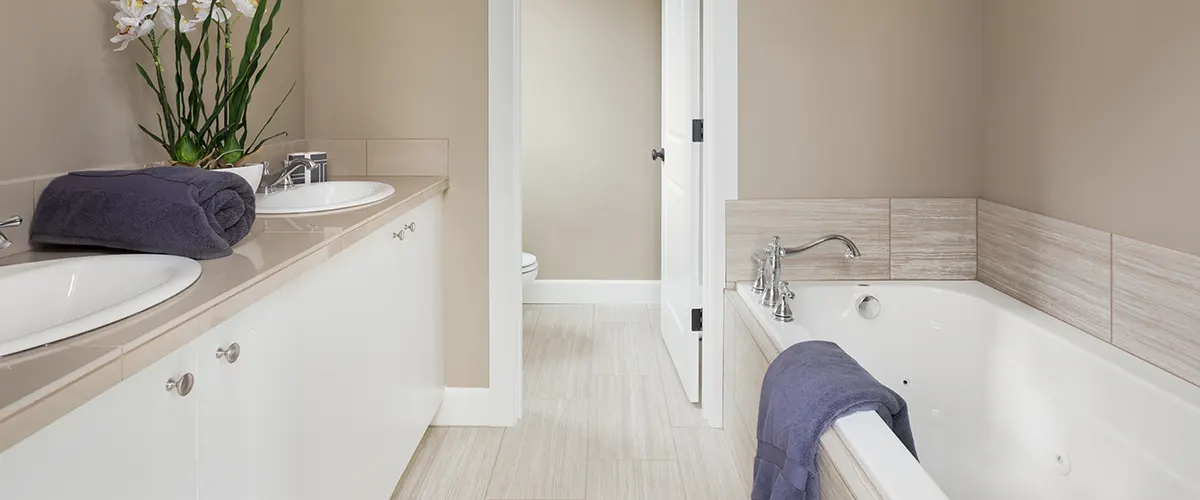
2. Hardwood Flooring In Bathrooms Looks Amazing
3. Hardwood Flooring Has A Long Lifespan
4. Hardwood Flooring Can Be Refinished Anytime
5. Hardwood Flooring Will Increase The Market Value Of Your Home
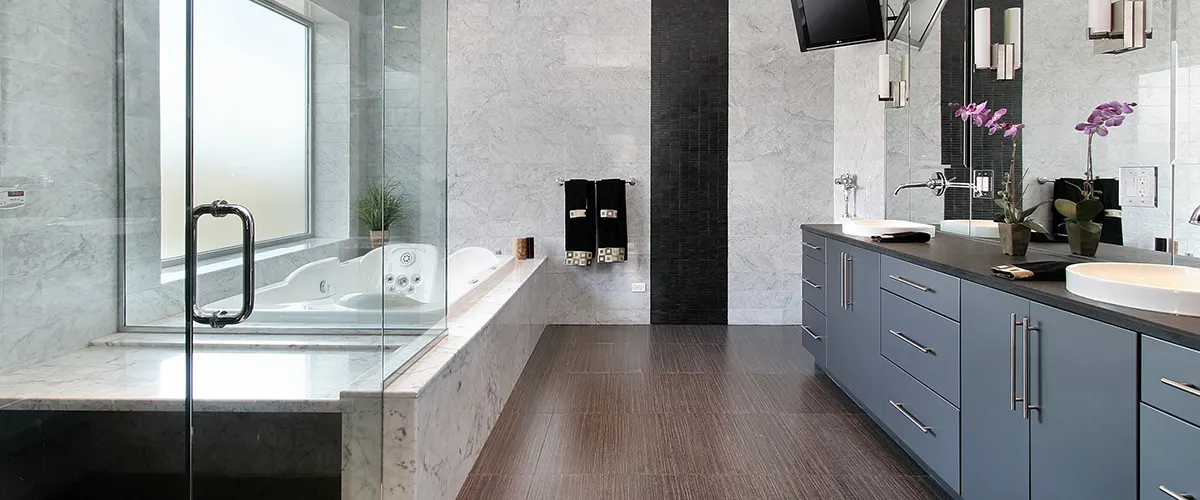
Disadvantages Of Hardwood Flooring In Bathroom
1. Hardwood Floors Are Not Fully Resistant To Water
2. Hardwood Flooring Is Not The Cheapest Option

3. Hardwood Floors Can Be Scratched Easily
4. Hardwood Floors Need To Be Sealed Regularly
5. Hardwood Floors Can Be Noisy

What To Consider For Your Bathroom Hardwood Flooring
The disadvantages of hardwood flooring in bathrooms shouldn’t decide for you. Clearly, this type of flooring requires more attention than other options, but for a powder room or a guests’ bathroom floor, installing wood floors remains an excellent option.
Let’s see a few things worth considering before you decide.
Shower And Tub Surrounds
The best way to avoid water spills on a wood floor is by installing shower and tub surrounds. A porcelain tile or LVT is a great way to stop water from reaching your flooring, and it also provides a nice look to your bath.
These are common upgrades that improve the functionality of every bath. So even if you don’t have a hardwood bathroom floor, installing shower and tub surrounds is a great idea. A strong exhaust fan, bath mats, and regular maintenance with a good sealer will offer your solid wood floor a great moisture barrier.
Keeping An Eye On Plumbing
Most flooring damage comes from the bathroom subfloor, from a failure of your plumbing fixtures, of the or simply from water accumulating there.
Before you install hardwood flooring in bathroom, check the plumbing system and make sure it functions properly. Check the valve connections, the pipes running underneath the bathroom flooring, and the hot and cold water lines for any water droplets.

Type Of Wood
Hardwood flooring options like ebony, cherry, live oak, and bamboo are said to be the most durable and toughest choices out there. If you’re looking to have a quality hardwood floor at the cost of a heavier price tag, choose one of these options. Engineered hardwood flooring is also an increasingly common option.
At Randy Stewart’s Hardwood Flooring, we’ll go through each and every one of your options to ensure you’re making an informed decision, impossible to regret.
Type Of Finish
Conclusion
It’s true that hardwood flooring in bathrooms are decreasing in popularity. And it’s only natural for that to happen with all the new materials coming out.
Luxury vinyl tile (LVT) and luxury vinyl planks (LVP) are incredible choices that look similar to hardwood, are more affordable, and are easier to maintain as well.
However, nothing compares with the beauty of a hardwood floor.
This flooring material is sure to uplift your bath and make it the comfortable and welcoming place it needs to be.
If you’re still trying to decide between getting a hardwood floor for your bathroom or another material, get in touch today! It costs you nothing to call and discuss your project with your local hardwood floor installer in South Carolina.
Key Points
Is hardwood a good choice for a bathroom?
- It depends on the bath, since hardwood suits a lower-traffic bath such as a powder room or guest bath better than a busy main bath.
- Comfort is a plus, as hardwood feels warmer underfoot than ceramic or porcelain tile.
- The look stands out, since wood gives a bathroom a more elegant, cozy feel than tile or luxury vinyl tile.
- Longevity is solid, as a well-maintained bathroom hardwood floor should look good for about a decade, and refinishing can renew a worn one.
- Resale value can benefit, since hardwood is described as a smart renovation investment that can recoup a good portion of its cost when you sell.
- Get a local opinion, since RS Hardwood Flooring walks homeowners through each option so the choice fits their bathroom.
What are the biggest drawbacks of hardwood in a bathroom?
- Water is the main risk, since heavy spills and drainage or plumbing leaks can damage hardwood and lead to rot or mold.
- Cost, as hardwood can be expensive depending on the species, and ceramic or luxury vinyl tile are suggested for tighter budgets.
- Scratches, since pet claws and children can mark the floor and darker woods show scratches and dents more, though sanding, sealing, and staining can make it look new again.
- Sealing, because hardwood needs regular sealing in a bathroom, which takes time and money.
- Noise, as wood can squeak after several years and amplifies footsteps.
- Worn floors are fixable, since RS Hardwood Flooring offers refinishing and restoration, so a worn bathroom floor does not always mean starting over.
How do shower and tub surrounds help protect a hardwood bathroom floor?
- They block spills, since surrounds are described as the best way to keep water from reaching the wood.
- Material matters, as porcelain tile or luxury vinyl tile is recommended for the surrounds.
- They improve the look, because surrounds are a common upgrade that makes any bathroom look better.
- Ventilation helps, since a strong exhaust fan works alongside the surrounds.
- Daily habits count, as bath mats and regular maintenance with a good sealer complete the moisture barrier.
- Start with a conversation, since the article notes that a call to RS Hardwood Flooring costs nothing and the team can talk through your bathroom.
What should I check before installing hardwood in a bathroom?
- Plumbing first, since most bathroom flooring damage comes from the subfloor, failed plumbing fixtures, or pooling water.
- Valve connections, which should be inspected for leaks before any wood goes down.
- Pipes under the floor, which are worth checking while the floor is accessible.
- Hot and cold water lines, where water droplets are a warning sign.
- Protection before the wood, as shower and tub surrounds should be in place before installation.
- Know your subfloor options, since RS Hardwood Flooring also offers subfloor repair.
Which wood types and finishes suit a bathroom?
- Tough species, since ebony, cherry, live oak, and bamboo are named as the most durable choices, usually at a higher price.
- Bamboo is a special case, as it is technically a grass and not a hardwood species, even though it is often grouped with wood flooring.
- Engineered hardwood, which is described as an increasingly common option.
- Polyurethane is the go-to finish, since it is the most popular and efficient choice, adds durability, and handles constant traffic.
- Either type works, as both oil-based and water-based polyurethane are described as good options.
- Choose with guidance, since RS Hardwood Flooring will walk you through each option so you can make an informed decision.
When should I choose tile or vinyl instead of hardwood in a bathroom?
- Tight budget, since ceramic or luxury vinyl tile cost less than most hardwood.
- Easier maintenance, as luxury vinyl tile and plank look similar to hardwood, cost less, and are easier to maintain.
- Busy main bath, since hardwood suits lower-traffic baths better.
- Wet zones, where porcelain tile or luxury vinyl tile is recommended for shower and tub surrounds.
- The trade-off, as hardwood is becoming less common in bathrooms, though the article says nothing compares with its beauty.
- Vinyl option, since RS Hardwood Flooring also installs luxury vinyl plank flooring.