
Post Summary
What are the first signs that hardwood floors need attention and may require replacement?
FAQ Answer 1:
Gaps in the wood and buckling boards are typically the earliest visible indicators that something is wrong with a hardwood floor. Gaps form when wood was installed improperly or when moisture conditions have caused boards to contract and separate — common in older homes where professional installation was not performed at the time. While gaps can sometimes be addressed with wood filler and refastening, the issue is rarely isolated and usually indicates a more systemic problem with the floor’s installation or its response to moisture conditions over time. Buckling — where boards lift away from the subfloor — indicates either moisture damage, subfloor failure, or inadequate expansion accommodation at installation. Both conditions are worth addressing promptly: the longer a floor deteriorates beyond the point of first visible damage, the more extensive and more expensive the eventual correction becomes.
What is the difference between signs that indicate refinishing and signs that indicate full replacement?
The distinction between refinishing and replacement comes down to whether the damage is cosmetic and surface-level or structural and material-level. Refinishing is the appropriate response when the floor is starting to squeak, when the color is fading, or when surface dents are minor — these are conditions that sanding, resealing, and restaining address without requiring any new wood. Full replacement becomes the correct choice when floors are cracking, chipping, significantly split, or structurally bent — conditions where the wood’s physical integrity has been compromised in ways that refinishing cannot correct. Exposed nails require immediate repair regardless of whether refinishing or replacement follows, as they represent an active safety hazard that needs to be resolved before any other assessment proceeds. When in doubt about which service is appropriate, a professional assessment from RS Hardwood Flooring provides the definitive answer before any money is committed.
How do the costs of refinishing and replacing hardwood floors compare?
Refinishing is consistently the more affordable option when the floor’s condition supports it — the process involves labor and the stain or sealant product, but does not require purchasing new wood boards. According to Forbes, the average cost to refinish hardwood floors is approximately $1,850, though the final cost depends on floor size, the type of finish selected, and the floor’s current condition. Full replacement adds the cost of new flooring boards to the labor and finishing costs, and the total varies significantly based on the hardwood species chosen — premium species cost considerably more than standard alternatives. The cost comparison between the two options should account for the expected service life each delivers: refinishing extends the existing floor’s life, while replacement resets it entirely with material that will serve for decades when maintained correctly.
What flooring alternatives should homeowners consider when replacing hardwood is the right decision?
Three alternative flooring categories are worth considering when full replacement is the decision. Luxury vinyl plank is the most practical alternative for active households with children and pets — it is durable, easy to clean, waterproof, and available in a range of styles that convincingly mimic the look of different hardwood species. RS Hardwood Flooring has installed more than 50 luxury vinyl floors in the Lowcountry area alongside its hardwood work. Laminate flooring is a more affordable option that resembles hardwood but is less durable and less long-lived than either hardwood or LVP — appropriate in applications where budget is the primary constraint and conditions are relatively controlled. Tile flooring — particularly large-format porcelain, ceramic, marble, or quartz — is among the most durable and long-lasting flooring options available, appropriate for spaces where moisture, durability, and easy maintenance are the primary considerations.
Why should Charleston and Lowcountry homeowners act on hardwood floor warning signs sooner rather than later?
The progression of hardwood floor damage is not linear — problems that are minor and manageable at their first visible appearance become more extensive and more expensive as they continue without attention. A small gap that could have been addressed with targeted repair becomes a larger section of failed flooring if left through multiple seasons of humidity cycling. Boards that creak and flex mildly can develop into more significant structural failures if the underlying cause is not addressed. Exposed nails are an active safety hazard that creates injury risk for every day they remain unaddressed. RS Hardwood Flooring has worked on hundreds of wood floors across Charleston, Summerville, Mount Pleasant, Kiawah Island, and Johns Island — and the consistent experience is that floors whose problems were addressed promptly required less extensive and less expensive intervention than those whose owners waited. Call RS Hardwood Flooring at (843) 900-4880 or request a free quote at rshardwoodfloors.com to schedule an assessment before the problem grows.
Since day one until now, we’ve worked on hundreds of wood floors. Some were looking in a very poor state and their replacement was long overdue. Others were wood floors looking great that homeowners just wanted to replace.
But in all these years, the most common question we’ve been asked is “how do I know when it’s time to replace hardwood floors?”.
For us, the moment we see it, we know it. We don’t even need to step on it to tell you how long your hardwood floors will continue to look good. At the same time, we can tell when wood floors have been defeated by time, wear, and accidents.
In this article, you’ll find out how you know it’s time to renew hardwood floors, and why it’s better to do it sooner than later.
First Signs You Need To Pay Attention To Your Wood Floor
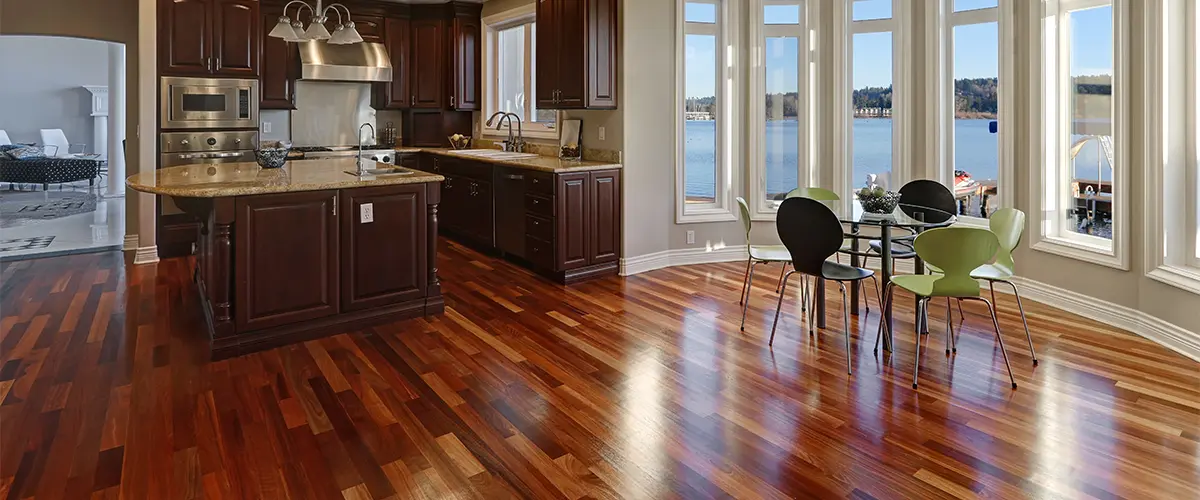
The first signs of a bad floor are usually when you start to see gaps in the wood, or when the boards start to buckle. While this can be fixed with some wood filler and some extra nails, the issue is rarely so simple.
Gaps will form when the wood is installed poorly. It happens in a lot of older homes where homeowners simply didn’t have the means to hire a proper flooring expert.
While this problem can be fixed, it will require some work, and it’s better to do it the moment you’re noticing it.
Your Floor Squeaks And Creaks
This is another major sign that your wood floors need your attention. Usually, it means it’s time for a restoration. However, sometimes it can be a matter of just reapplying a sealant and not allowing the wood to dry any longer.
Strengthening the floor with nails or screws can help reduce the noise, and in some severe cases you might need to replace the floorboards entirely.
Dents And Wood Splits
Wood dents and wood splits are usually indicative of a floor that is in need of restoration. If the damage is severe, it might be necessary to replace the floorboards altogether. If the dents are barely visible, refinishing hardwood floors will do the trick.
The best way to fix a dent is by sanding down the wood and reapplying the same stain or sealant over it. For wood splits, wood filler can work wonders, but remember that this is not a permanent fix.
Fading Wood Color
If your wood floor is starting to fade, it’s usually a sign that it’s time for a refinishing. On furniture, fading can also be caused by direct sunlight, so you might want to consider moving your furniture around to prevent this from happening.
However, we’re talking about wood floors here. If the fading is severe, the best thing left to do is sand the floorboards and reapply a new coat of sealant or wood stain.
Exposed Nails
Needless to say that exposed nails are a major issue that needs to be addressed as soon as possible. These can cause serious injuries for you and your family, so the quicker you fix them, the better.
While this is not necessarily a sign that you need to replace hardwood floors, it’s a clear sign that they need to be repaired. Check the entire floor surface for nails and hammer them down. If the nail is loose, it’s best to replace it.
Should You Refinish Or Replace Hardwood Floors
- If the wood flooring is starting to squeak and its color to fade, refinishing will work just fine.
- If, on the other side, the wood floors are starting to crack, are chipped or bent, you're better off replacing the wood floors altogether.
The Cost To Refinish Hardwood Floors Vs Replace Hardwood Floors
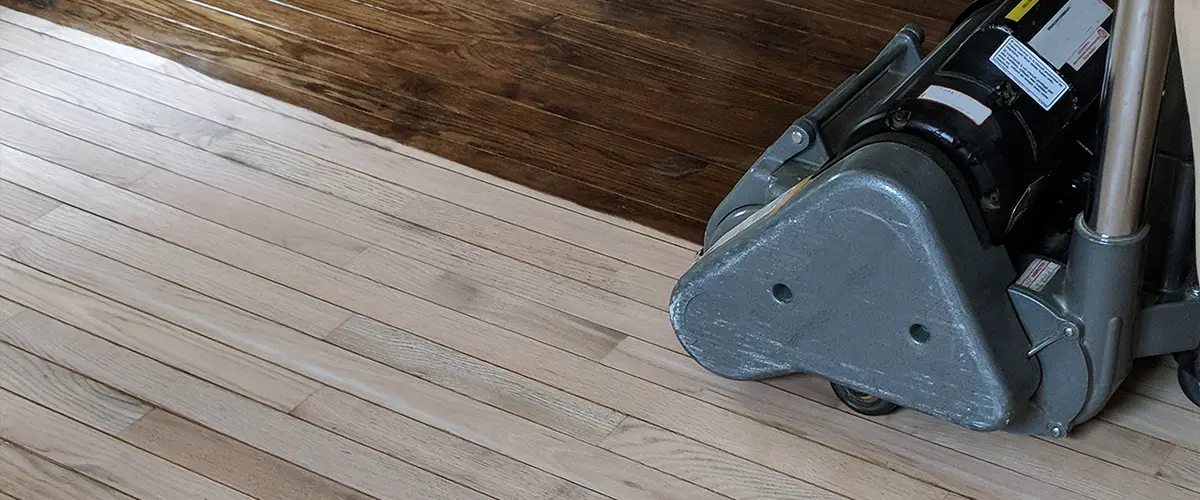
Naturally, hardwood floor refinishing will be much more affordable than replacing the wood floors altogether.
When refinishing, you’ll pay for labor and the sealant or stain of choice. You’re not getting new wood boards, so you’re saving a lot of money.
When replacing, you’ll pay for labor, sealants or stains, and new flooring boards. Depending on the hardwood you choose, the total cost will vary.
According to Forbes, the cost to refinish hardwood floors is about $1,850.
Alternatives To Wood Floors
When it comes to flooring, there are a lot of options to choose from. If you’re not a fan of wood floors, or if your floors are starting to show some severe signs of damage, you might want to consider some of these alternatives.
Luxury Vinyl Plank Flooring
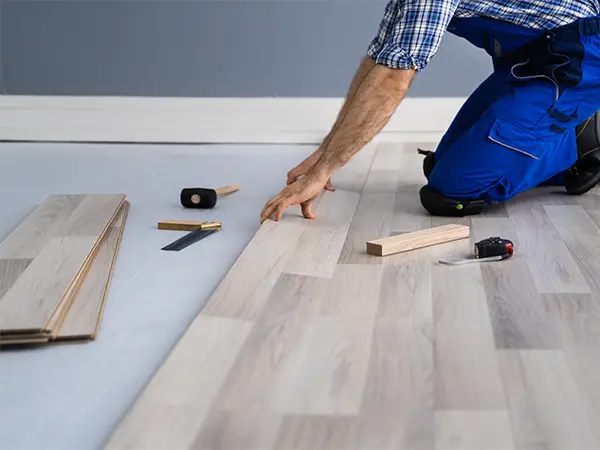
Luxury Vinyl Plank flooring is a great alternative to wood floors, especially if you have a busy household with kids and pets. It’s durable, easy to clean, and comes in a variety of styles and colors. Luxury vinyl plank is a popular option for many of our customers as it mimics the look of all wood species and their wood grain.
Laminate Flooring
Laminate flooring is another option that’s growing in popularity. It’s often mistaken for real hardwood, but it’s much more affordable. It’s less durable than other options, but it’s easier to clean and maintain. Compared to hardwood floors, laminate is cheaper, but also less efficient.
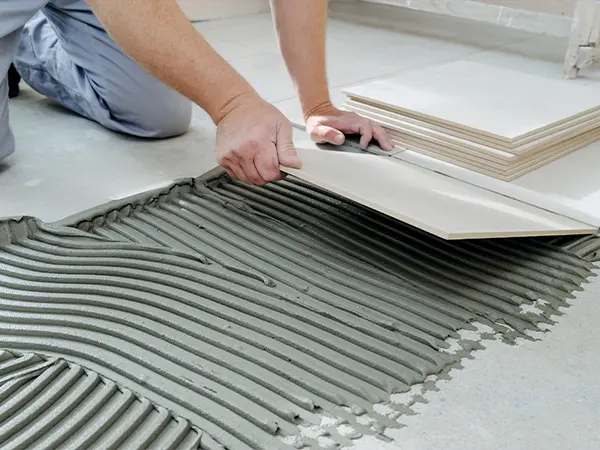
Tile Flooring
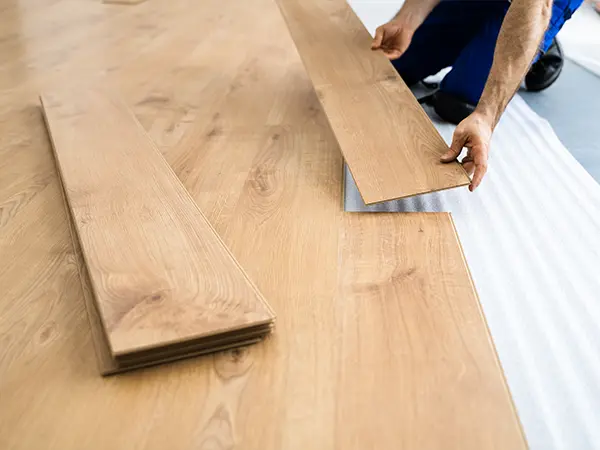
Truth be told, tile floors are some of the most efficient flooring options our customers choose, but it’s also the most expensive. They’re durable, easy to clean, and come in a variety of styles and colors.
Large porcelain or ceramic tile are definitely worth looking into, but so are marble or quartz tile floors if you have the budget.
Conclusion
There are a lot of options to choose from when it comes to flooring, so don’t feel like you have to stick with your hardwood floor. If they’re starting to show some wear and tear, or if you’re just not a fan of them, consider replacing them with an entirely new material.
If you’re still in love with your wood floors, that’s okay too! Refinishing them will fix most of their visible issues, but if the wear and tear is more serious, you might need a wood floor restoration or to replace hardwood floors entirely.
Here at Randy Stewart Hardwood Flooring, we’re experts when it comes to wood floors. We offer professional installation, wood floor refinishing, and restoration services in Summerville, Mount Pleasant, Charleston, and more of SC.
Call us today at (843) 287-9439 to discuss your project and let’s schedule an in-depth visit to determine what’s the best way to bring your hardwood flooring back to life!
Key Points
How does professional experience change the assessment of a hardwood floor’s condition and why do visual signs mean more to trained eyes than to homeowners?
- Experienced hardwood flooring professionals develop the pattern recognition that converts visible floor conditions into accurate diagnoses — the same gap, squeak, or surface condition that a homeowner interprets as a maintenance issue may indicate an underlying structural problem to a trained eye that changes the appropriate response entirely.
- The ability to assess a floor’s condition without stepping on it — reading the surface pattern, the gap geometry, the direction of buckles, and the color of staining — is the diagnostic skill that experience produces and that a homeowner looking at the same floor cannot replicate through research alone. RS Hardwood Flooring’s team has developed this assessment capability across hundreds of Lowcountry floor evaluations.
- Misreading a floor’s condition in either direction creates financial consequences — treating a replacement-level floor as a refinishing candidate produces a refinishing investment that fails and must be repeated as a replacement anyway, and treating a refinishing candidate as a replacement produces an unnecessary replacement cost when the floor had serviceable years remaining. Professional assessment protects against both errors.
- The Charleston and Lowcountry climate adds regional context to floor assessment that general hardwood floor guides do not account for — gaps that would indicate installation problems in a drier climate may indicate seasonal humidity cycling in coastal South Carolina, and buckles that suggest acute water damage in other markets may reflect ongoing crawl space moisture conditions specific to Lowcountry home construction.
- RS Hardwood Flooring’s regional experience across 700-plus hardwood floor installations and more than 1,000 restoration and refinishing projects in Charleston, Summerville, and Mount Pleasant produces the local context that makes floor assessment accurate for the specific conditions of Lowcountry homes rather than generically applicable across all climates and construction types.
- The professional assessment that RS Hardwood Flooring provides before any service recommendation is the foundation of the company’s work — determining what a floor actually needs rather than defaulting to the most comprehensive or most profitable service is the professional practice that produces correct outcomes and the long-term client relationships that RS Hardwood Flooring has built across the Lowcountry.
What does each specific warning sign reveal about a hardwood floor’s condition and what response does each indicate?
- Gaps in the wood reveal either installation problems or moisture-driven contraction — boards that were not properly fastened at installation or that have contracted through repeated humidity cycling without adequate expansion accommodation. The size, distribution, and pattern of gaps tells a professional whether the cause is localized or systemic, and whether targeted repair or broader intervention is the appropriate response.
- Squeaking and creaking indicate movement between boards, boards and subfloor, or within the subfloor structure itself — the location and pattern of the sound helps identify whether the source is surface fastening that has loosened, subfloor connections that have weakened, or structural issues at a deeper level. Squeaking that responds to sealant reapplication is a surface issue; squeaking that persists through sealant treatment indicates a mechanical problem that requires fastener work or board replacement.
- Dents that are shallow and affect only the finish layer are refinishing candidates — sanding removes the dented surface and exposes undamaged wood beneath that accepts new stain and finish evenly. Dents that have compressed the wood fiber below the sanding depth that refinishing reaches, or that have fractured the wood’s surface, indicate structural damage that refinishing cannot restore.
- Wood splits reveal a more serious structural compromise than dents — the wood has fractured along its grain in a way that weakens the board’s structural integrity. Wood filler addresses the appearance of a split temporarily, but it is not a permanent structural repair. When splits are numerous or in high-traffic locations, board replacement is the appropriate response rather than filler application that will fail under continued foot traffic and moisture cycling.
- Fading color that is even across the floor surface is a classic refinishing candidate — the stain and finish layers have depleted through UV exposure and daily use, but the wood beneath remains sound. Fading that is uneven in ways that reflect moisture staining, sun pattern damage, or finish degradation from cleaning product misuse may indicate conditions that require assessment before a refinishing recommendation is made.
- Exposed nails are an immediate safety issue that requires response independent of any other assessment — the first action is to address the safety hazard by hammering down or replacing the exposed fastener, and the floor condition assessment that determines whether refinishing or replacement follows can proceed after the immediate hazard is resolved. Loose nails that cannot be successfully reset indicate that the board or the substrate beneath it has failed at that fastening point.
How should Charleston homeowners approach the refinish versus replace decision and what framework produces the right outcome?
- The condition assessment should precede any cost comparison — comparing the cost of refinishing to the cost of replacement before establishing which the floor’s condition actually supports leads homeowners toward the less expensive option regardless of whether it is the appropriate one. The correct sequence is assessment first, then cost discussion within the range of viable options.
- Surface damage that has not penetrated to the wood’s structural layer — fading, surface scratches, minor denting, squeaking — consistently supports refinishing as the appropriate and sufficient response. The investment in refinishing extends the floor’s service life at a fraction of replacement cost when the wood itself is sound.
- Structural damage that refinishing cannot correct — deep cracks, severe splits, significant buckling, boards that have failed at their fastening points — requires replacement as the only service that addresses the actual problem. Refinishing a floor with structural damage produces cosmetic improvement over a floor that continues to fail structurally.
- The Lowcountry climate’s effect on the refinish versus replace timeline is a regional consideration that national cost guides and general hardwood floor recommendations do not account for — floors in Charleston-area homes are subject to humidity cycling, crawl space moisture, and salt air conditions that can accelerate the progression from refinishing candidate to replacement candidate on timelines faster than floors in drier markets experience.
- The cost of deferring either refinishing or replacement should be part of the decision framework — the damage that continues to accumulate while a homeowner defers acting on visible warning signs adds to the eventual correction cost and reduces the service life available from either refinishing or new installation. Acting promptly on the correct service is always less expensive than acting late on the same service.
- RS Hardwood Flooring’s free assessment and quote process walks homeowners through this decision with professional guidance specific to the actual condition of their floor — providing the information needed to make a confident choice between refinishing and replacement based on accurate condition evaluation rather than on general guidelines that may not match the specific situation.
What should homeowners know about luxury vinyl plank and laminate as alternatives to hardwood replacement and when does each make sense?
- Luxury vinyl plank’s primary advantage over hardwood replacement in active households is its full waterproofing combined with scratch resistance — LVP eliminates the moisture vulnerability that makes hardwood a higher-maintenance choice in bathrooms, kitchens, mudrooms, and ground-floor spaces in Lowcountry homes where humidity and moisture exposure are consistent conditions rather than occasional events.
- Modern LVP’s realistic wood-look appearance has closed the visual gap with hardwood significantly through high-resolution printing and embossed texture technology — homeowners who want the visual warmth of wood floors without the maintenance requirements of hardwood now have a convincing alternative that is appropriate for the Lowcountry’s demanding moisture environment.
- LVP’s individual plank replaceability when damage occurs is a practical long-term ownership advantage over hardwood — a damaged plank is replaced rather than requiring sanding and refinishing of the surrounding area, making localized damage repair faster, simpler, and less expensive than the equivalent repair on a hardwood floor.
- Laminate’s position as the most budget-conscious wood-look alternative is appropriate in controlled environments where moisture exposure is minimal — it is less durable and less moisture-resistant than LVP and does not carry the refinishing longevity of hardwood, but it delivers an acceptable wood aesthetic in applications where conditions and expectations match its performance profile.
- Laminate should not be specified in moisture-exposed areas — its core material swells and delaminates when moisture penetrates through seams or at edges, a failure mode that is particularly consequential in Charleston’s humid environment where ambient moisture conditions are higher than the national average that laminate specifications typically assume.
- RS Hardwood Flooring’s ability to install both hardwood and luxury vinyl plank — with more than 50 LVP installations alongside 700-plus hardwood floor installations — means homeowners evaluating alternatives to hardwood replacement can receive honest, experienced guidance about which option best matches their household’s conditions, lifestyle, and budget rather than being directed toward a single product category regardless of fit.
Why is tile a legitimate consideration alongside hardwood replacement and what makes it the strongest option in specific applications?
- Tile’s durability in demanding conditions exceeds hardwood’s for the specific applications where durability is the primary requirement — entryways, kitchens, bathrooms, and mudrooms that experience the moisture exposure and foot traffic intensity that accelerates hardwood wear are the spaces where tile’s performance advantages most clearly justify considering it alongside hardwood replacement.
- Large-format porcelain tile’s popularity in upscale residential projects reflects both its durability and its aesthetic versatility — modern large-format porcelain in wood-look and stone-look designs delivers premium visual impact alongside the moisture resistance, scratch resistance, and longevity that the materials they replicate cannot match under the same conditions.
- Tile’s effectively unlimited service life when correctly installed — often lasting longer than the surrounding finishes, cabinetry, and appliances installed at the same time — is the performance characteristic that makes it the lowest lifetime cost flooring option in the spaces where it is appropriate, despite its higher installation cost relative to hardwood or LVP.
- Marble and quartz tile options in higher-end applications create the luxury aesthetic in bathrooms, entryways, and formal spaces that resonates with buyers at the upper end of the market — and in Charleston’s competitive real estate market, premium tile in these spaces is a specification that buyers recognize and value as a finished quality indicator.
- Tile’s primary limitation in spaces where hardwood is preferred is comfort — the cold, hard surface that makes tile ideal for bathrooms and kitchens makes it less comfortable in living areas and bedrooms where softness, acoustic warmth, and tactile comfort are assets that hardwood and carpet provide more effectively. Matching the specification to the space’s priorities is the framework that produces the right recommendation.
- RS Hardwood Flooring’s ability to discuss tile as a genuine alternative alongside hardwood and LVP when homeowners are evaluating full floor replacement reflects the company’s commitment to recommending what is best for the specific space and condition rather than defaulting to the product category the company most often installs. The right floor for the specific situation is always the recommendation.
How does acting promptly on hardwood floor warning signs protect homeowners’ investments and what are the consequences of extended deferral?
- The progression of hardwood floor damage accelerates once structural integrity begins to fail — boards that have started to separate create pathways for moisture intrusion that expands the damage, subfloor exposure that accelerates deterioration, and mechanical stress on adjacent boards that spreads the failure beyond its origin point. The floor that needed modest repair at first visible damage may require extensive replacement after a full humidity season without attention.
- Subfloor damage that develops beneath an unaddressed failing hardwood floor adds cost to the eventual correction that the surface replacement alone would not require — moisture that has reached the subfloor through gaps in damaged flooring may require subfloor repair or replacement in addition to the new flooring installation, multiplying the project cost beyond what prompt surface repair would have produced.
- The safety risks of deferred hardwood floor repair — exposed nails, buckling boards, and unstable sections — create ongoing injury hazard for every person who uses the floor during the deferral period. The liability associated with a fall or injury on a floor whose hazards were known and unaddressed is a risk that prompt repair eliminates entirely.
- Property value impact of visibly deteriorated hardwood floors in Charleston’s real estate market is measurable — buyers and appraisers discount properties with flooring in poor condition, and the discount they apply typically exceeds the cost of repair that would have maintained the floor in acceptable condition. Deferred floor maintenance converts a capital investment in the floor into a negotiating liability at the point of sale.
- The Lowcountry’s seasonal humidity cycling means that damage visible in spring — after the relatively drier winter heating season — will likely worsen through the summer humidity peak if not addressed before the moisture content of the air rises. Each humidity season that passes with damage unaddressed adds to the cumulative deterioration that the eventual repair or replacement must address.
- RS Hardwood Flooring’s recommendation to act on visible warning signs promptly is not a sales strategy but a professional observation drawn from hundreds of floor evaluations across the Lowcountry — the consistent experience is that floors whose problems were addressed at first visibility required less intervention than those whose owners waited, and that the cost difference between early and late action is always in favor of acting early. Call (843) 900-4880 or request a free quote at rshardwoodfloors.com to schedule an assessment today.