
Post Summary
What are the main advantages of luxury vinyl plank flooring?
Luxury vinyl plank flooring offers five primary advantages that explain its popularity across residential flooring applications. Durability — LVP’s multi-layer construction with a dedicated wear layer resists the scratches, dents, and stains that softer or thinner flooring materials sustain under daily household use, with a lifespan of 20 to 25 years with proper care. Appearance — modern LVP uses high-resolution printing and embossed texture to convincingly mimic hardwood and stone in ways that earlier vinyl products could not achieve. Ease of installation — click-lock plank edges interlock and float over the subfloor without adhesive in most residential applications, making LVP one of the faster and more accessible flooring installations available. Repairability — individual damaged planks can be replaced without disturbing the surrounding floor, unlike vinyl sheet that typically requires full-floor replacement when damage occurs. Affordability — LVP costs significantly less than hardwood or natural stone at comparable aesthetic quality levels, making it a practical specification for homeowners who want a wood-look floor at a budget-appropriate price.
What are the main limitations of luxury vinyl plank flooring that homeowners should understand before purchasing?
Three significant limitations distinguish LVP from alternatives that buyers should evaluate honestly before selecting it. Water resistance — LVP resists surface moisture well, but its click-lock seams create pathways for water to reach the subfloor when liquid sits on the surface for extended periods. Regular vinyl sheet flooring has fewer seams and therefore superior water resistance in applications with frequent water exposure. Heat sensitivity — both LVP and regular vinyl are vulnerable to extreme heat; hot skillets, burns, and sustained high temperatures cause damage that cannot be repaired without plank replacement. Resale value — LVP does not carry the resale value premium of solid hardwood or natural stone, though it performs meaningfully better than regular vinyl. It also cannot be refinished — when the wear layer is exhausted, the floor requires replacement rather than restoration, limiting its effective ownership horizon to the product’s rated lifespan.
How does luxury vinyl plank compare to regular vinyl sheet flooring in practical performance?
LVP and regular vinyl sheet differ meaningfully across every performance category. Appearance: LVP’s thicker construction, wider color range, and more realistic printing produce a significantly more convincing hardwood or stone appearance than regular vinyl’s thinner print layer. Durability: LVP’s greater thickness and rigidity make it more resistant to scratches, dents, and tears than regular vinyl’s softer surface, and its plank format allows individual piece replacement rather than full-floor replacement when damage occurs. Water resistance: regular vinyl sheet’s advantage — fewer seams — makes it more water-resistant than LVP in high-exposure environments like bathrooms. Installation: LVP’s click-lock system is faster and easier than regular vinyl’s full glue-down bond. Lifespan: LVP lasts 20 to 25 years versus regular vinyl’s 10 to 15 years with proper maintenance. Cost: LVP runs approximately two to seven dollars per square foot versus regular vinyl’s fifty cents to two dollars per square foot. Resale value: LVP provides measurable resale value contribution; regular vinyl provides essentially none.
Is luxury vinyl plank a good flooring choice for kitchens, bathrooms, and basements in Charleston’s humid climate?
LVP is a strong specification for kitchens and basements in the Lowcountry, and a viable but qualified choice for bathrooms. In kitchens, LVP’s water resistance handles routine spills and tracked-in moisture well, and its durability withstands the high foot traffic and frequent cleaning that kitchen floors require. In basements and ground-floor spaces, LVP’s moisture tolerance makes it a better specification than hardwood, which is vulnerable to the subfloor moisture that below-grade installations in Charleston’s climate regularly produce. In bathrooms, LVP’s seam structure requires attention — the click-lock gaps between planks allow water to penetrate if standing water or flooding occurs. Caulking seams at the tub and shower surround and maintaining prompt spill cleanup reduce this risk. For full bathroom installations with consistent water exposure, vinyl sheet’s seamless surface remains the more conservative moisture protection specification.
How does LVP installation differ from hardwood and regular vinyl installation and what does that mean for homeowners?
LVP’s click-lock floating installation — where plank edges interlock and the floor floats over the subfloor without adhesive — is faster, cleaner, and more accessible than both hardwood and regular vinyl installation methods. Hardwood installation requires professional nailing, stapling, or gluing to the subfloor, subfloor moisture testing, and a multi-day acclimation period before installation begins. Regular vinyl sheet requires a full glue-down bond that demands precise adhesive application, a clean and level subfloor, and cure time before the floor can be used. LVP’s click-lock system eliminates the adhesive and acclimation requirements, allowing installation to proceed more quickly under a broader range of conditions. RS Hardwood Flooring installs LVP alongside hardwood flooring throughout Charleston, Summerville, and Mount Pleasant, and can advise homeowners on which installation approach and which material best suits their specific space, timeline, and budget.
Luxury vinyl plank is one of the most popular flooring options for kitchens, bathrooms, basements, bedrooms, or any other room in your home.
And it’s no wonder!
Luxury vinyl plank (LVP) and luxury vinyl tile (LVT) are packed with a lot of benefits that few other flooring options have. Combine all of them with their affordable price, and you soon realize how great these floors are!
However, like any other material on the market, they also have their fair share of cons.
Let’s discuss the luxury vinyl plank pros and cons!
What Is Luxury Vinyl?
First things first, let’s understand what truly is luxury vinyl and how it works.
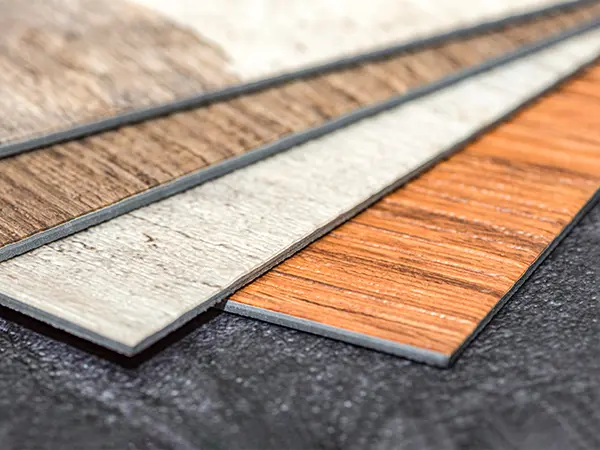
Luxury vinyl flooring is a material that resembles natural materials such as hard wood, stone, or ceramic tile.
It comprises multiple layers, including a protective top layer, a printed design layer, and a vinyl backing. Because of all their benefits, they’re a popular choice for high-traffic areas and homes with children or pets.
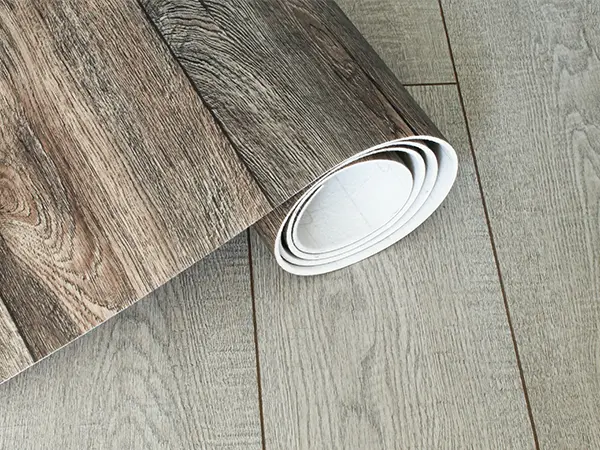
Both LVP and LVT are so flexible that you can cut through them with a knife, making their installation fairly easy.
Here are some differences between luxury vinyl and regular vinyl.
| Regular Vinyl Flooring | Luxury Vinyl Flooring | |
|---|---|---|
| Cost | $0.50 to $2 per square foot | $2 to $7 per square foot |
| Thickness | Very thin | Thicker, with a more rigid build |
| Dimensions | 6 or 12 foot, 6 to 18 inch square tiles | 4.5 by 48-inch planks, 12 to 18 inch square tiles |
| Installation | Done with full glue-down bond | Done with click-lock edges |
| Durability | Prone to scratches | More scratch-resistant |
| Resale value | Doesn't have any | Has higher resale value |
| Water Resistance | Better waterproofing | Good waterproofing |
| Seams | Sheets have fewer seams | Both LVP and LVT have more seams |
| Lifespan | 10 to 15 years | 20 to 25 years |
| Looks | Poorly resembles natural wood or stone | Much better at mimicking other materials |
In the paragraphs below, we’ll discuss some major differences between standard vinyl and luxury vinyl, along with the pros and cons of luxury vinyl plank flooring.
Luxury Vinyl Vs. Regular Vinyl Appearance
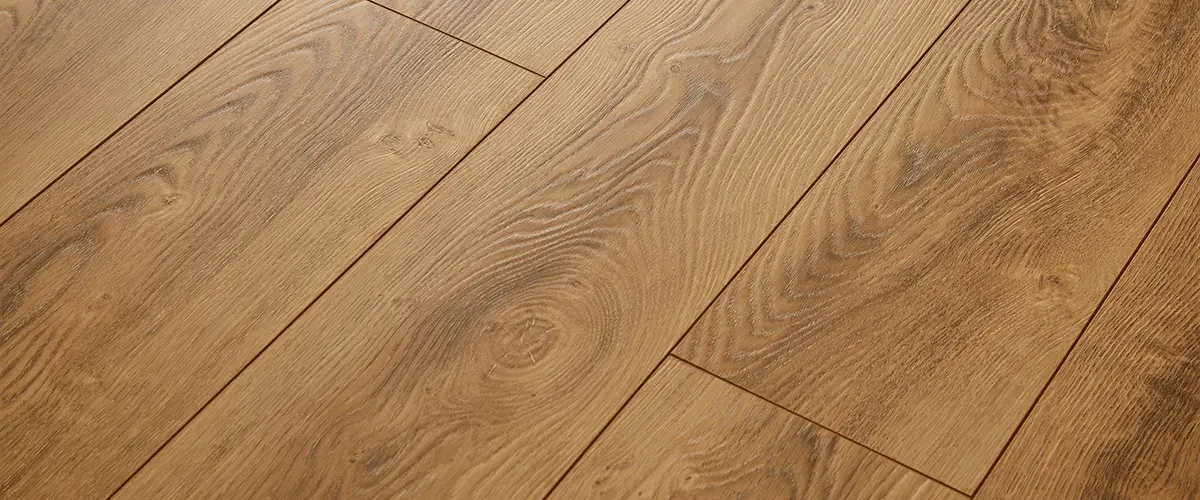
Both regular and luxury vinyl is made to resemble the natural look of a hardwood species or of a natural stone. On regular vinyl, the gap between the sheets is not as convincing as it is on luxury vinyl.
Luxury vinyl offers a wider range of colors and styles, whereas regular vinyl sticks to the most popular options. As for sizes, both offer reasonable options.
The regular vinyl roll is 6 or 12 foot wide and the tile are generally 9 to 18 inch squares, while the luxury vinyl plank size is 48 inches by 4 1/2 inch, and the tile size is 16 x 16 inches, with more options available.
In the matter of appearance, luxury vinyl planks and tiles give you a more authentic appearance and more options to choose from.
Luxury Vinyl Vs. Regular Vinyl Resistance
Because regular vinyl has fewer and tighter seams, its water resistance is much higher than that of luxury vinyl. Because luxury vinyl plank tries to resemble the look of hardwood boards, there are more frequent gaps to simulate that, therefore, more seams through which water can get beneath them.
As for heat, both flooring options tolerate normal heat, like that of direct exposure to sunlight. If it’s extreme heat, like that of a burning fire or hot skillets, both types of vinyl will suffer greatly.
So, in the matter of resistance, regular vinyl is better simply because it has fewer seams, so fewer opportunities for water to get through.
Luxury Vinyl Vs. Regular Vinyl Maintenance
Both luxury vinyl and regular vinyl need to be cleaned at a very similar rate and with the same methods. The same basic rules apply to both: sweep or vacuum daily, and clean any water spills immediately.
Once a week, you can also mop the floors with warm (not hot) water mixed with soap. Neither luxury vinyl nor regular vinyl needs sealers or waxes, as they can do more harm to the sheet’s design layer.
So in terms of maintenance, both luxury vinyl and regular vinyl are easy to care for.
Luxury Vinyl Vs. Regular Vinyl Durability
Regular vinyl has a softer surface, so it’s more prone to dents, scratches, and tears. To make things worse, if there’s any damaged sheet, you’ll most likely have to replace the entire floor, as you can’t take it apart and replace just one sheet of vinyl.
Luxury vinyl, on the other side, is more rigid and ticker than standard vinyl, making it more resistant to basic damages that most floors see. Dents, scratches, tears, and stains are easier to fix, as you can actually dissemble and replace the damaged luxury vinyl plank or tile.
Besides, regular vinyl’s life expectancy is between 10 to 15 years (with proper maintenance and care), while luxury vinyl can last for as long as 25 years.
In terms of durability, luxury vinyl is more difficult to get damaged and easier to be repaired (or replaced).
Luxury Vinyl Vs. Regular Vinyl Installation
All regular vinyl is installed using a strong, full glue-down bond. This ensures the sheets are secured to the subfloor and they’re not going anywhere.
Luxury vinyl plank flooring is installed much easier, with a click-clock system. The edges of the “planks” interlock and float over the subfloor without them needing any kind of glue. Sure, there are circumstances where glue is advised, but that happens very rarely.
From an ease of installation standpoint, luxury vinyl is much easier and faster to install.
Luxury Vinyl Vs. Regular Vinyl Resale Value
It’s a well-known fact that regular vinyl is seen as a dated and rather poor flooring material. Although this is not entirely true, regular vinyl still has very little to zero ROI. In other words, it won’t boost your resale value, and if anything, it might actually be a reason for a potential buyer to ask for a lower price if the floor is dated and damaged.
Luxury vinyl might not have the ROI of solid hardwood or Italian porcelain tile, but they’re definitely much better than regular vinyl or many other flooring options.
Therefore, in terms of resale value, luxury vinyl plank is much better than regular vinyl.

Conclusion
So, ready to decide?
If not, we can give you our expert advice on the luxury vinyl plank pros and cons. We’ll also tell you precisely if this material is what you need or if there’s a better, cheaper option.
At Randy Stewart’s Hardwood Flooring, we offer professional hardwood flooring installation, refinishing, or restoration. We also install LVP and LVT flooring for all homeowners looking for a more budget-friendly option that brings a lot of value to their homes.
We’re flooring experts certified by the NWFA, and we’re ready to be at your service 24/7!
If you want to start, give us a call at (843) 900-4880 or request a free quote for your project in Summerville, Charleston, Hanahan, Mount Pleasant, or surrounding areas in SC!
Key Points
What makes luxury vinyl plank flooring’s multi-layer construction superior to regular vinyl and how does each layer contribute to overall performance?
- LVP’s wear layer is the component that most directly determines scratch and stain resistance — the protective transparent coating that covers the print layer and contacts the floor surface. Wear layer thickness, measured in mils, is the specification variable that separates entry-level LVP from commercial-grade products, with thicker wear layers providing meaningfully greater resistance to the scratching and surface abrasion that daily household use produces.
- The printed design layer beneath the wear layer is where LVP’s appearance advantage over regular vinyl originates — high-resolution photography of actual wood grain, stone texture, and ceramic tile produces the realistic visual character that distinguishes quality LVP from the less convincing printed surfaces of regular vinyl. The design layer’s quality and the embossing applied over it determines how authentically the floor mimics the natural material it represents.
- The vinyl core layer provides dimensional stability and the rigid backing that gives LVP its characteristic underfoot feel — thicker and more rigid than regular vinyl sheet, the core layer resists the denting and deflection that thinner flooring materials experience under furniture and foot load. Stone plastic composite core and wood plastic composite core are the two main core constructions, with SPC providing greater density and WPC providing additional cushioning.
- The underlayment attached beneath some LVP products adds sound absorption, thermal insulation, and slight cushioning that floating floors without underlayment do not provide — a feature that improves both comfort underfoot and acoustic performance in multi-story homes. Products without attached underlayment can receive separate underlayment installation, though the combined thickness affects the floor height at transitions.
- Regular vinyl sheet’s single-layer or minimal-layer construction sacrifices the durability, appearance authenticity, and repairability that LVP’s multi-layer structure provides — trading these performance advantages for the seamless surface that gives sheet vinyl its superior water resistance and lower material cost.
- RS Hardwood Flooring’s LVP installation services across the Lowcountry incorporate product selection guidance based on each room’s specific performance requirements — wear layer thickness appropriate to the traffic level, core construction appropriate to the moisture environment, and design selection appropriate to the aesthetic direction — producing installations that are correctly specified rather than generically applied.
How does LVP’s appearance compare to hardwood and natural stone and what are the realistic expectations buyers should have?
- Modern LVP’s visual gap with hardwood has narrowed dramatically through advances in high-resolution printing and embossed texture technology — quality LVP products are regularly mistaken for hardwood by casual observers, and the distinction that was immediately apparent between vinyl and wood in earlier product generations requires trained observation to identify in current premium products.
- The texture layer embossed over LVP’s print layer produces tactile variation that mimics the surface character of real wood grain in ways that earlier flat-printed vinyl could not achieve. Hand-scraped and wire-brushed embossing patterns that follow the printed grain design are particularly effective at producing the surface authenticity that distinguishes premium LVP from basic products.
- Color consistency across LVP planks is an advantage over real hardwood in applications where uniform appearance is the design priority — manufactured planks can be produced to match within tighter color tolerances than natural wood, which varies between planks from different parts of the same tree. This consistency is an advantage in some design contexts and a detractor in others where the variation of natural wood is the desired aesthetic.
- The limitation of LVP’s appearance authenticity is most apparent to trained eyes at close inspection and in high-light conditions — the print layer’s pattern repeats at intervals that real wood does not, and the surface lacks the depth and three-dimensionality of actual wood grain that even the most sophisticated embossing technology cannot fully replicate.
- Regular vinyl’s appearance limitation — thinner printing, less convincing gap simulation between sheets, and narrower style range — is visible without close inspection in a way that premium LVP is not. This appearance difference is the most practically significant distinction between regular vinyl and LVP for homeowners whose primary concern is how the floor looks.
- For Lowcountry homeowners choosing between LVP and hardwood purely on aesthetics, RS Hardwood Flooring’s NWFA-certified expertise allows an honest comparison informed by direct experience with both materials — including guidance on which spaces and design directions best suit each material’s authentic appearance strengths rather than its marketing claims.
How do LVP and regular vinyl compare in durability, repairability, and effective lifespan and what does each comparison mean in practice?
- LVP’s greater thickness and rigidity produce measurably better resistance to scratches, dents, and tears than regular vinyl’s softer, thinner surface — the same sharp object, heavy furniture leg, or pet claw contact that damages regular vinyl may leave LVP’s wear layer intact or produce a shallower mark that is less visible and less structurally significant.
- The repairability difference between LVP and regular vinyl is among the most consequential practical distinctions for long-term ownership. LVP’s click-lock format allows individual damaged planks to be removed and replaced without disturbing the surrounding floor — limiting repair scope and cost to the specific damaged area. Regular vinyl sheet’s continuous format means a tear, deep scratch, or stain in one location requires either a visible patch or full-floor replacement depending on the severity and location of the damage.
- LVP’s 20 to 25 year lifespan versus regular vinyl’s 10 to 15 years reflects the combination of greater wear layer thickness, more rigid core construction, and the repairability that extends the installation’s life by allowing localized damage to be addressed rather than triggering full replacement. This lifespan difference is a significant factor in total cost of ownership comparisons that material price alone does not capture.
- Neither LVP nor regular vinyl can be refinished — when the surface is worn, scratched, or faded beyond the threshold of acceptable appearance, replacement is the only option. This distinguishes both vinyl products from hardwood, which can be sanded and refinished multiple times to restore its appearance without replacement. For buyers with long ownership horizons and refinishing flexibility as a priority, this limitation is the most consequential con of both vinyl product types.
- Regular vinyl’s durability limitation — softer surface, more prone to dents and tears — is most consequential in high-traffic areas and households with pets and children where the specific damage sources that regular vinyl is most vulnerable to are most frequently present. LVP’s greater durability makes it the correct specification in these contexts even at its higher material cost.
- The color and pattern matching challenge for LVP repairs grows over time as product lines evolve — a plank from a 2022 installation may not match exactly with a plank from the same product line in 2026. Storing surplus planks from the original installation specifically for future repairs is the standard recommendation that the repairability advantage of LVP’s format makes worth following.
Where does LVP fall in the resale value spectrum between regular vinyl and hardwood and how should homeowners factor this into their flooring decisions?
- Regular vinyl’s resale value contribution is effectively zero to negative — buyers and appraisers recognize it as a dated, low-quality flooring material that signals budget constraint rather than investment, and its presence can be a factor that motivates price negotiation rather than a neutral feature. This is the practical real estate reality that regular vinyl’s lower cost does not offset for homeowners who plan to sell.
- LVP’s resale value contribution is positive but below hardwood and natural stone — buyers recognize quality LVP as a modern, practical, and attractive flooring choice that is preferable to the alternatives it typically replaces. The value gap between LVP and hardwood exists but is narrowing as LVP’s quality and buyer familiarity improve, and in the practical Charleston market, LVP in good condition is a neutral to positive feature rather than the negative that regular vinyl represents.
- The resale value case for hardwood over LVP is strongest in the premium residential market where buyers specifically value authentic natural materials and are willing to pay a premium that reflects the material’s refinishing longevity and authenticity. In mid-range residential markets, the practical performance advantages of LVP — lower maintenance, waterproofing, easier repair — may appeal to buyers as much as hardwood’s resale signal.
- For investment properties and rental units, the resale value consideration is less relevant than the durability and maintenance cost comparison — LVP’s lower replacement cost, easier repair, and lower maintenance burden produce better returns in these contexts than hardwood’s higher upfront cost and maintenance requirements, even though hardwood’s resale signal is stronger for owner-occupied properties.
- Hybrid flooring strategies — hardwood in primary living areas and bedrooms where buyers focus their aesthetic evaluation, LVP in kitchens, bathrooms, and utility spaces — optimize both the resale value contribution of hardwood and the practical performance of LVP in the areas where each material’s strengths are most relevant.
- RS Hardwood Flooring’s guidance for Charleston-area homeowners navigating the hardwood versus LVP decision incorporates the local real estate market’s buyer expectations alongside each material’s performance characteristics — producing recommendations that reflect what actually drives value in the Summerville, Charleston, and Mount Pleasant residential markets rather than generic flooring industry assumptions.
How do LVP’s installation requirements and process advantages compare to hardwood and regular vinyl and what should homeowners expect?
- LVP’s click-lock floating system eliminates the two most time-consuming elements of hardwood installation — the acclimation period that hardwood requires before installation begins, and the fastening method (nailing, stapling, or gluing) that attaches hardwood to the subfloor. These eliminations compress LVP installation into a shorter timeline and allow the floor to be used more quickly after installation is complete.
- Subfloor preparation requirements for LVP are similar to hardwood in some respects and less demanding in others — LVP requires a flat, clean subfloor just as hardwood does, but tolerates somewhat more subfloor moisture variation than hardwood’s more stringent moisture content requirements. This tolerance difference is practically significant in Lowcountry renovation projects where subfloor moisture conditions are more variable than in drier climates.
- Regular vinyl’s full glue-down installation is the most demanding of the three formats in terms of subfloor preparation requirements — the adhesive bond requires a perfectly clean, flat, dry subfloor surface for consistent adhesion, and any contamination or irregularity produces bond failures that manifest as bubbling, lifting, and edge curling in the installed sheet. The adhesive also makes removal significantly more involved than click-lock LVP disassembly.
- LVP’s floating installation allows the floor to be removed and reinstalled in a way that glue-down vinyl and hardwood do not — this is relevant in renovation scenarios where the flooring needs to be removed temporarily for subfloor repair or plumbing access, and where the homeowner wants to recover the flooring material rather than replace it after the subfloor work is complete.
- The DIY installation accessibility of LVP’s click-lock system is a genuine advantage for homeowners who want to manage their own installation — the system is designed for consistent results with standard tools and basic skill, and the floating format means installation errors are correctable by disassembling and reinstalling without the adhesive commitment that glue-down vinyl requires or the professional tools that hardwood nailing demands.
- Professional installation remains the correct choice for LVP in most residential scenarios despite its DIY accessibility — the subfloor preparation, expansion gap management, transition strip installation, and pattern layout decisions that professional installers handle correctly are the same areas where DIY installations most commonly produce the problems that require professional remediation. RS Hardwood Flooring’s professional LVP installation services across the Lowcountry produce results that DIY installation cannot consistently replicate.
What maintenance practices are shared between LVP and regular vinyl and where do their care requirements diverge?
- Both LVP and regular vinyl share the same foundational maintenance approach — daily sweeping or vacuuming on the hard floor setting, prompt spill cleanup before liquids can reach seams or penetrate the surface, and weekly damp mopping with appropriate cleaning chemistry. Neither product requires sealing, waxing, or refinishing — the simplicity that distinguishes both vinyl types from hardwood maintenance applies equally to both.
- Neither product should be cleaned with wax or paste polish — these products leave a film on vinyl surfaces that regular cleaning cannot remove and that progressively dulls the floor’s appearance. The temptation to restore a dulled vinyl floor’s shine with the wax products that work on some other flooring types produces the opposite of the intended result on vinyl surfaces.
- Water temperature in mopping affects both products similarly — warm water is appropriate, hot water is not. Both LVP and regular vinyl are sensitive to elevated temperatures from cleaning water, and the same steam mop prohibition that applies to LVP applies equally to regular vinyl for the same heat-related damage reason.
- The seam management distinction between the two products creates a maintenance divergence in wet areas — regular vinyl’s fewer seams require less attention to standing water and liquid management than LVP’s more frequent seam structure. In bathroom and kitchen applications, this distinction makes prompt spill cleanup more consequential for LVP than for regular vinyl.
- Commercial sealant application to restore shine when either floor’s surface has dulled is the correct surface restoration approach for both — the specific sealant product must be appropriate for vinyl rather than a generic floor finish, and manufacturer guidance on whether the specific product accepts sealant treatment should be confirmed before application.
- RS Hardwood Flooring’s maintenance guidance for both LVP and vinyl sheet flooring in Charleston, Summerville, and Mount Pleasant reflects the NWFA certification and direct installation experience that distinguishes product-specific advice from generic flooring care recommendations — ensuring that the maintenance approach matches the actual product installed rather than assuming that all hard surface floors require identical care.